
REVIEW · AUSTRIA ROMANTIC EXPERIENCES
Vienna: Romantic Classics Piano, Violin, and Cello Concert
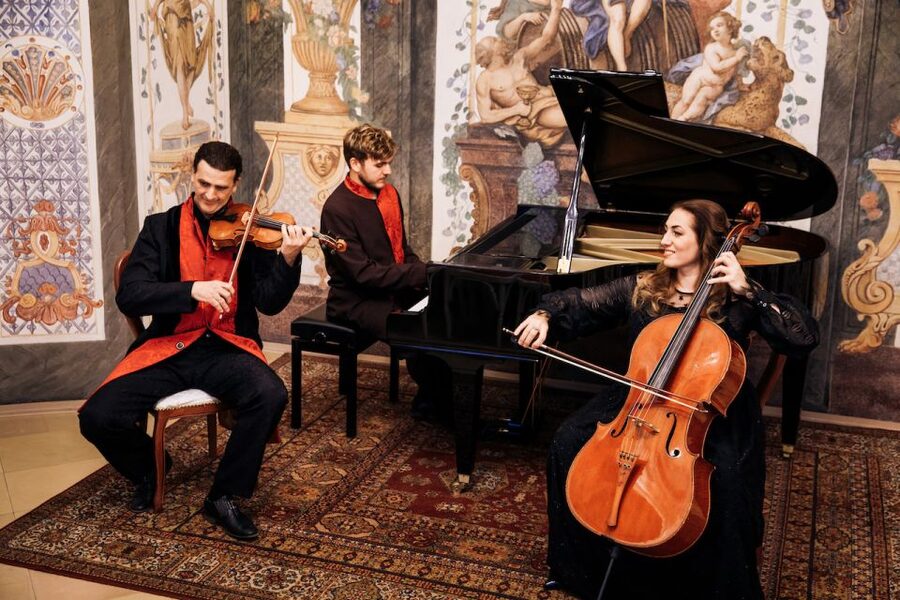
The best part of this Vienna concert is its small historic setting. The Sala Terrena’s frescoes and close seating put you near the musicians, while the program moves from Beethoven’s familiar Moonlight Sonata to less expected pieces by Haydn, Bach, Paganini, and Massenet. I like the clear acoustics and the handy location, just 150 meters from St. Stephen’s Cathedral.
I also like the mix of piano, violin, and cello, with Claudio Bentes, Dushan Sretovic, and Teodora Miteva featured in the program. The main drawback is practical rather than musical: refreshments are not included, and any drinks available during the break require cash. Toilet signs can also be hard to spot.
Key points at a glance
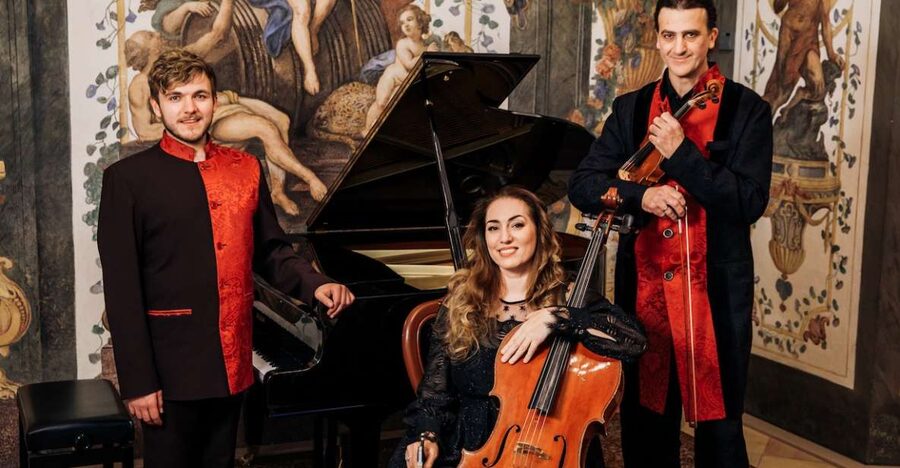
- Frescoed Sala Terrena: Hear the concert in a historic room with an intimate feel and clear acoustics.
- Three accomplished musicians: Violinist Claudio Bentes, pianist Dushan Sretovic, and cellist Teodora Miteva share the program.
- A broad 90-minute program: Expect Beethoven, Mozart, Chopin, Liszt, Schubert, Brahms-related repertoire, Haydn, Bach, Paganini, Saint-Saëns, and Massenet.
- Easy central location: Enter through Deutschordenskirche, only 150 meters from St. Stephen’s Cathedral.
- Several ticket levels: Choose student seating, back-row seating, or seats closer to the performers.
- Flexible booking: You can cancel up to 24 hours ahead for a full refund and reserve without paying immediately.
A chamber concert beside St. Stephen’s Cathedral
Vienna has no shortage of classical concerts. The trick is finding one that fits your evening, your budget, and your interest in the music. This 90-minute performance works well because it keeps the setting compact and the program varied.
The entrance is at Deutschordenskirche, near a poster stand for concerts at Mozarthaus. From St. Stephen’s Cathedral, the venue is only 150 meters away, so it is easy to pair the concert with an evening walk through central Vienna.
Arrive 15 minutes before the listed start time. That gives you time to find the entrance, check your coat, and settle into the room without rushing. A cloakroom is included, which is useful in Vienna’s colder months when you may be carrying a coat that would otherwise crowd your seat.
The exact starting time depends on the date, so check availability before booking. The concert itself lasts 90 minutes. That is long enough to feel like a proper cultural evening, but short enough to fit around dinner or another central Vienna activity.
More Concerts in the world:
- Paris: Romantic Piano Concert at Saint-Julien-le-Pauvre
★ 4.7 · 126 reviews - Bali/Benoa: 5-Course Romantic Evening Cruise With Live Music
★ 4.8 · 104 reviews - Your Romantic Dinner in Cancun, includes national open bar and live music
★ 4.5 · 37 reviews
The Sala Terrena changes the mood
The Sala Terrena is the setting’s main attraction. Its frescoes provide a much more characterful backdrop than a plain recital hall, and the smaller room keeps you close to the performers.
That closeness matters with this kind of program. In a large concert hall, a piano trio can feel formal and distant. Here, you are more likely to notice the exchange between piano, violin, and cello. The room’s acoustics have been praised for allowing each note to come through with clarity and depth.
The tradeoff is that a small venue has limited space. Your ticket category affects where you sit, with student tickets, back-row tickets, and seats closer to the performers available. If seeing the musicians’ technique matters to you, paying more for a forward position may make sense. If the music is your main goal, a back-row ticket can still offer the advantage of hearing the full room without paying for the closest seats.
The venue is wheelchair accessible. Since the entrance is connected with Deutschordenskirche, you should still allow extra arrival time if you need to confirm the most convenient way into the room.
How the 90-minute program unfolds
The program is built like a musical sampler. It does not focus only on one composer or one mood. Instead, it moves between graceful chamber music, piano showpieces, lyrical melodies, and famous romantic themes.
Haydn opens with Hungarian color
Joseph Haydn’s Trio all’ungarese, Hob XV:25 begins the program. Its three sections are Andante, Poco Adagio, and Finale, Rondo.
This is a useful opening choice because the work gives all three instruments room to interact. The rondo finale brings a lighter, more animated character after the slower middle section. If you are new to chamber music, listen for the way the melody passes between the instruments rather than staying with the piano alone.
More Romantic Experiences in the world:
- Romantic Venice: 30 Minute Gondola Ride with Serenade
★ 3.5 · 2,742 reviews - Paris: Romantic Cruise with 3-course Dinner on Seine River
★ 4.3 · 2,295 reviews - Vienna: Romantic Old Town 2-Hour Discovery Tour
★ 4.7 · 816 reviews - Dubrovnik: Romantic Sunset Cruise & Cave Visit with a Local
★ 4.7 · 611 reviews
Beethoven brings the famous Moonlight Sonata
Beethoven’s Moonlight Sonata, Adagio, is likely to be the most immediately familiar selection. Its slow movement is quiet, focused, and emotionally direct.
Hearing it within a program that also includes violin and cello gives the piece a different role than it has in a full piano recital. It acts as a pause in the larger chamber conversation, placing attention on the piano and on the controlled pacing of the music.
The program also includes Beethoven’s Sonata op. 2, Allegro con brio. This is a useful contrast. The Moonlight Sonata selection is measured and inward, while the Allegro con brio brings more energy and motion. Together, the two works show two very different sides of Beethoven within the same concert.
Mozart offers a lighter interlude
Mozart’s La tartine de beurre, also known as Das Butterbrot, adds a playful moment. The title refers to a simple buttered-bread theme, and it gives the program a lighter touch between more serious works.
This short piece helps keep the evening from becoming too solemn. That balance is important in a concert marketed around romantic classics. You get emotion and virtuosity, but also a reminder that classical music can be witty and relaxed.
Liszt and Chopin supply the piano fireworks
Franz Liszt’s Un sospiro is one of the program’s central romantic pieces. Its title means a sigh, and the work is known for its flowing, singing line and demanding piano writing.
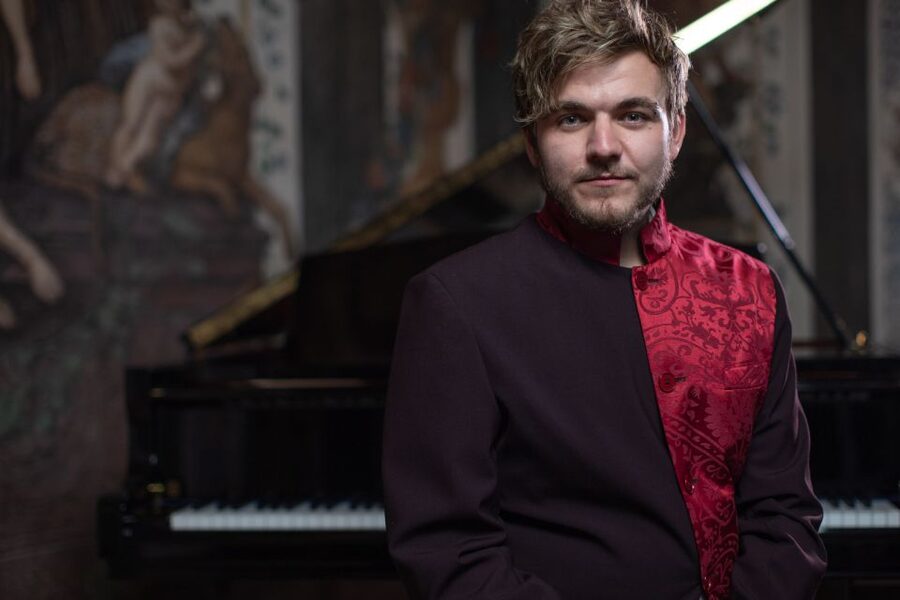
Dushan Sretovic is featured as a piano virtuoso, with Chopin interpretations noted as part of his international performance work. His contribution is especially important in the Liszt and Chopin selections, where control, delicacy, and technical confidence all matter.
Chopin appears twice in the listed program. The Nocturne in C minor, op. 48, no. 1, brings a dark and expressive mood. The Étude op. 10, no. 1 in C major is more athletic, asking the pianist to make a technical study sound like a finished performance.
This pairing gives you a clear comparison. The Nocturne focuses on atmosphere and phrasing. The Étude shows speed, reach, and precision. If you want a concert with recognizable piano highlights, these pieces are among the strongest reasons to book.
Bach shifts the focus to cello
The Cello Suite in G major, BWV 1007, Allegro, changes the sound of the room. Instead of the piano carrying the main weight, the cello takes the lead.
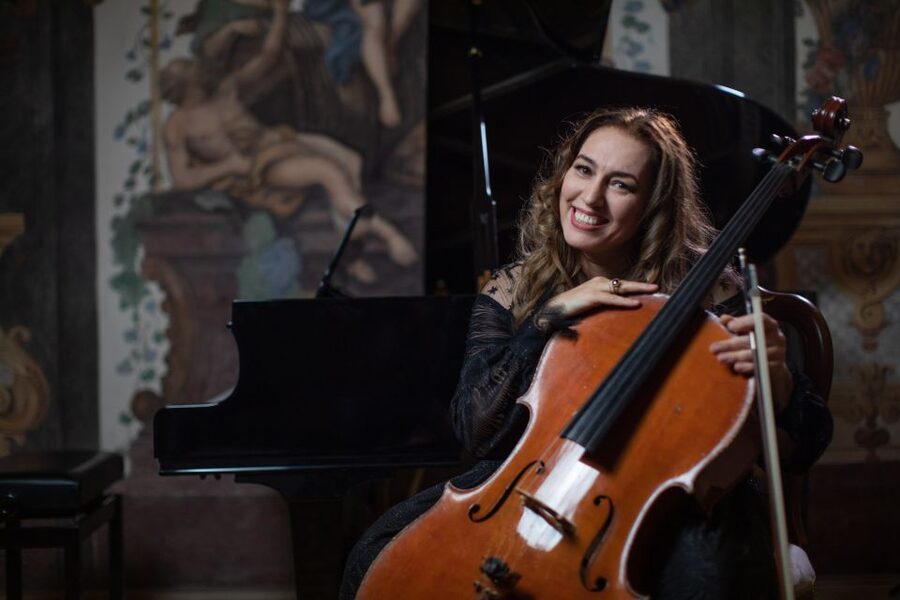
Teodora Miteva is described as an award-winning soloist who has performed in international competitions. Her cello selection gives the program a more personal and unaccompanied quality. Bach’s writing can sound simple at first, but the musical line needs careful shaping to remain expressive without extra instruments.
For many people, this may be one of the less familiar pieces on the program. That is part of its value. You are not only getting the expected Vienna favorites. You are also hearing music that lets the cello speak on its own.
Paganini adds a sharp technical edge
Niccolò Paganini’s Caprice 13 brings another change of pace. Paganini is closely linked with violin virtuosity, and a caprice is designed to test both technique and musical control.
With Claudio Bentes featured as violinist, this is the moment to listen closely to articulation and agility. A small room helps here because the sound does not have to travel across a huge hall before reaching you. You may find that the close setting makes the technical detail more noticeable.
Saint-Saëns and Massenet return to lyrical moods
Camille Saint-Saëns’s The Swan is one of the evening’s gentlest selections. Its long, singing cello line has an almost vocal quality, making it a natural partner for Massenet’s Thaïs Meditation.
Massenet’s Meditation is especially well known for its violin melody. Together, these two works offer a calm, polished stretch of music after Paganini’s sharper demands. This section should appeal to you if you prefer graceful melodies over displays of speed.
Schubert closes with emotional weight
The program ends with Schubert’s Trio in E-flat major, op. 100, Andante con moto. The work is substantial enough to give the closing minutes a sense of purpose, yet the Andante con moto movement remains lyrical rather than overwhelming.
Ending with Schubert is a good fit for this setting. His chamber music depends on conversation, balance, and sustained mood. With piano, violin, and cello working together, the final selection brings the evening back to the trio format after the solo works.
The performers and what they add
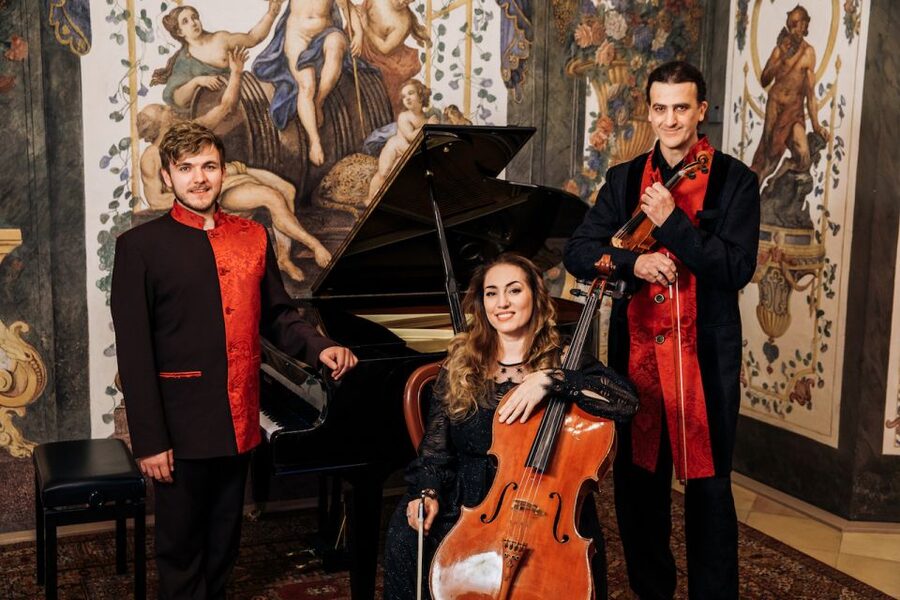
The featured artists give the evening a clear musical identity. Claudio Bentes is the violinist associated with the concert presentation. His role reaches from the demanding Paganini Caprice to the lyrical Massenet Meditation and the ensemble passages in the Haydn and Schubert trios.
Dushan Sretovic handles the piano-heavy center of the program. The Beethoven sonata, Liszt, Chopin, and Mozart pieces give him several chances to show different styles, from quiet restraint to brisk technical work.
Teodora Miteva brings the cello into focus through Bach’s Cello Suite, Saint-Saëns’s The Swan, and the larger trio works. The program describes her as a soloist with numerous international competition awards.
The concert provider is Konzerte im Mozarthaus KG. The host or greeter can assist in English or German. That is useful at the entrance, especially if you are trying to identify the correct gate near Deutschordenskirche.
Is $69 a fair price?
At $69 per person, this is not the cheapest way to hear classical music in Vienna. It is also not priced like a major opera or orchestra performance. The value depends on what you want from the evening.
I think the price is easier to justify if you care about the room and the proximity to the performers. You are paying for a 90-minute concert in a historic interior, with a broad program and several featured solo works. The central location also makes it simple to fit into a sightseeing day.
The value is weaker if you only want one specific composer or a full-length performance of a single major work. This is a mixed program, so some pieces are short and function as transitions or mood changes. You should choose it for variety, atmosphere, and access to live chamber music rather than for a single complete symphony.
Student tickets may make the concert more affordable. Back-row tickets offer another way to reduce the cost, while closer seats are available if you want a more direct view of the musicians.
Practical details that affect your evening
You should arrive 15 minutes before the concert. The entrance is not described as being at the cathedral itself, so use Deutschordenskirche and look for the poster stand connected with concerts at Mozarthaus.
The cloakroom is included. Drinks are not included, and refreshments during the break may be available for cash purchase outside the concert area. Bring cash if you want that option, since card payment is not guaranteed.
The facilities could be easier to identify. Toilet signs may not be obvious, so it is sensible to locate them before the performance begins or ask the staff during the break.
Cancellation is flexible up to 24 hours before the concert for a full refund. You can also reserve now and pay later, which helps if you are still arranging your Vienna schedule.
Who will enjoy this concert most?
I would choose this concert for a first or second visit to Vienna when you want classical music without committing an entire night to the opera or a large orchestra.
It suits you especially well if you:
- Like famous melodies but want a few less familiar works mixed in
- Prefer a small room to a large formal concert hall
- Want a central activity near St. Stephen’s Cathedral
- Enjoy piano, violin, and cello in the same program
- Need a 90-minute performance that fits around dinner
- Appreciate historic interiors and close views of musicians
It may be less suitable if you want a full orchestra, elaborate staging, or a single uninterrupted work. The program changes composer and mood often, so listeners seeking a tightly focused recital may prefer another format.
Should you book it?
Book this concert if you want a convenient Vienna evening with strong musical variety, an intimate setting, and several excellent entry points into classical music. The Sala Terrena, clear acoustics, and central location give the performance practical advantages, while the Beethoven, Chopin, Liszt, Bach, Saint-Saëns, and Schubert selections provide plenty of recognizable names.
Before booking, check the seating category and decide how close you want to be. Bring cash for possible refreshments, arrive early enough to find the Deutschordenskirche entrance, and keep your expectations aimed at a varied chamber program rather than a full-scale concert production.
FAQ
How long does the concert last?
The concert lasts 90 minutes.
Where is the concert held?
The concert takes place in the Sala Terrena, with entry through Deutschordenskirche. The venue is 150 meters from St. Stephen’s Cathedral.
Which musicians perform?
The featured musicians are violinist Claudio Bentes, pianist Dushan Sretovic, and cellist Teodora Miteva.
Which composers are included?
The program includes Haydn, Beethoven, Mozart, Liszt, Chopin, Bach, Paganini, Saint-Saëns, Massenet, and Schubert.
Is the venue wheelchair accessible?
Yes, the activity is listed as wheelchair accessible.
Can I cancel my booking?
Yes. You can cancel up to 24 hours before the concert for a full refund. Reserve now and pay later is also available.
Just added for couples in the world
- Can Picafort: FunForTwo, couple adventure game and city walk★ 3.3 · 9 reviews
- Budapest: Proposal Photos at enchanting Fisherman’s Bastion★ 5.0 · 3 reviews
- Budapest: romantic photoshoot at Buda’s iconic sightseeings★ 5.0 · 6 reviews
- Cala Millor: AdventureDate, fun game, city walk for couples★ 3.3 · 7 reviews
- Bordeaux Photographer : Romantic or Family or Friends★ 5.0 · 3 reviews
- Bovec: Soča River Private Rafting Experience for Couples★ 4.6 · 5 reviews
- Beijing: Hanfu Experience & Photo Shoot – Family & Couples★ 5.0 · 2 reviews
- Beach Proposal at My Beach Resort★ 5.0 · 2 reviews
Austria Romantic Experiences, compared.
Romantic Old Town 2-Hour Discovery Tour
Read our review →
From Salzburg Romantic Carriage Ride through the Countryside
Read our review →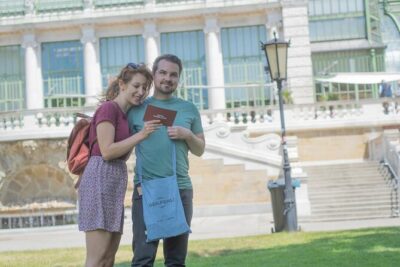
A box for a romantic walk in the city center of Vienna
Read our review →Browse the lists this tour appears in