
REVIEW · PARIS ROMANTIC EXPERIENCES
A Tapestry of Art and Romance in Montmartre
Montmartre’s charm comes from the way art, romance, music, and ordinary Paris streets overlap. In about 90 minutes, this walk links the Moulin Rouge, the I Love You Wall, Picasso’s old hangout, Dalida’s bust, Place du Tertre, and Sacré-Coeur, giving you a useful first look at the hilltop district.
I like the route’s focus on artistic Montmartre, not just postcard views. I also like the guides’ patient pace. Arthur has adjusted the walk for slow walkers, bad knees, and photographers who need time for pictures. The main consideration is that most sights are viewed from outside, and the group may contain as many as 50 people.
Key points at a glance
- A short route with a strong story: The walk connects cabaret, street art, painters, singers, and religious architecture in one compact outing.
- Arthur may lead your walk: He is described as passionate about Montmartre and patient with families, slower walkers, and photo stops.
- The route climbs toward Sacré-Coeur: The walk ends at 35 Rue du Chevalier de la Barre, in front of the basilica.
- Most landmarks are exterior visits: You see and discuss places such as Moulin Rouge, Le Bateau-Lavoir, La Maison Rose, and Moulin de la Galette from the street.
- Good value for a guided introduction: At $36.12, you are paying mainly for explanation and orientation, not admission tickets or refreshments.
- The tour is offered in English: A mobile ticket is provided, and confirmation arrives when you book.
Why this Montmartre walk works
Montmartre can feel confusing at first. The neighborhood has steep streets, famous corners, old artist studios, restaurants, souvenir shops, and one enormous white basilica. It is easy to walk past an important place without knowing why it matters.
This tour gives you a clear thread. You begin at Blanche, near the Moulin Rouge, then move uphill through the district’s artistic heart before finishing at Sacré-Coeur. The route is short enough to fit into a busy Paris day, yet it includes several places tied to the people who shaped Montmartre’s public image.
I especially like the mix of famous and less obvious stops. Moulin Rouge is the big opening hook. Le Mur des Je t’aime adds a romantic photo stop. Le Bateau-Lavoir shifts the mood toward painting and modern art. Dalida brings in French popular music, while La Maison Rose and Place du Tertre show how the neighborhood still presents its artistic identity.
The walk is not designed as an interior museum tour. You will not be paying for entry to the Moulin Rouge or visiting the inside of a Picasso studio. Instead, the guide explains what happened at these locations while you stand in the streets where the stories took place.
That approach suits you if you want context before exploring alone. It is less suitable if you expect long indoor visits, formal museum interpretation, or a detailed study of every church and painting in Montmartre.
More Romantic Experiences in Paris:
- Paris: Romantic Cruise with 3-course Dinner on Seine River
★ 4.3 · 2,295 reviews - Paris Private Romantic Horse & Carriage Ride
★ 4.5 · 414 reviews - Romantic Paris Vintage Citroën 2CV Tour
★ 4.6 · 198 reviews
Starting at the Moulin Rouge
The tour begins at Blanche and opens with the Moulin Rouge, viewed from outside. You get about 10 minutes here, enough to take pictures and hear why this cabaret became one of Paris’s best-known symbols of nightlife and performance.
The stop works well as an introduction because it immediately places you in the lively lower section of Montmartre. From here, the route moves away from the broad entertainment image of the neighborhood and into its quieter artistic and residential corners.
There is no admission ticket included, and the tour does not take you inside. If you want a performance, that is a separate plan with a separate cost. For this walk, the value lies in the guide’s explanation and the connection to the streets that follow.
A romantic pause at Le Mur des Je t’aime
Le Mur des Je t’aime, or the Wall of Love, is a natural place for a 10-minute photo break. The artwork presents the words I love you in many languages, making it one of the more direct romantic stops on the route.
This is a simple visit, but it gives the walk a change of pace. After the Moulin Rouge, you move from stage romance to a public piece of modern street art. The stop is free, and you can take pictures without paying an entry fee.
Do not expect a long talk here. Ten minutes is enough to see the wall, hear its place in the neighborhood, and continue uphill. I would treat it as a pleasant pause rather than the main reason to book the tour.
Le Bateau-Lavoir and Montmartre’s artists
Le Bateau-Lavoir receives the longest stop, around 20 minutes. That tells you something about the tour’s priorities. This is where the guide can explain the artists who lived and worked in Montmartre during the 19th century and how the district became tied to modern art.
The site matters because Montmartre was more than a scenic hill with cafés. Artists lived in modest conditions, shared buildings, developed new ideas, and helped turn the area into an important center for Parisian art. The guide’s job here is to connect a plain-looking location with the people and creative changes associated with it.
This is also the part of the route where a well-prepared guide adds real value. Without explanation, Le Bateau-Lavoir may not look like much. With context, you can better understand why the street address matters and why Montmartre’s artistic reputation lasted.
The stop is listed as an exterior visit, so keep your expectations realistic. You are learning on the pavement, not entering a preserved artist residence.
Same place, a slower evening:
- Paris: Romantic Photoshoot for Couples
★ 4.9 · 131 reviews - Paris: Romantic Piano Concert at Saint-Julien-le-Pauvre
★ 4.7 · 126 reviews - Classic, Romantic Paris: 3-Hour Vintage 2CV Tour
★ 4.7 · 120 reviews - Romantic Montmartre: Paris Lost Lovers Exploration Game and Tour
★ 4.5 · 107 reviews
Moulin de la Galette and old Montmartre
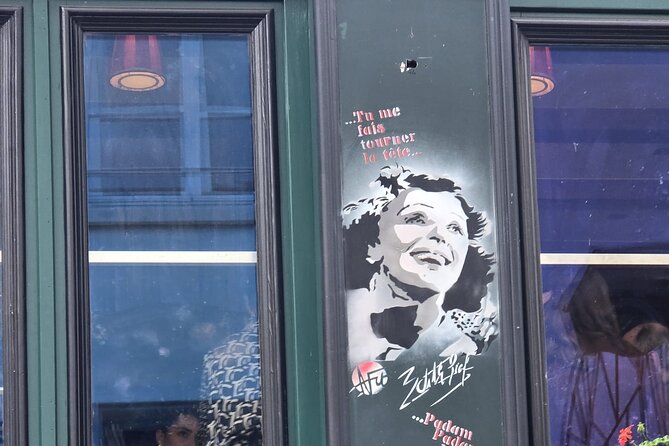
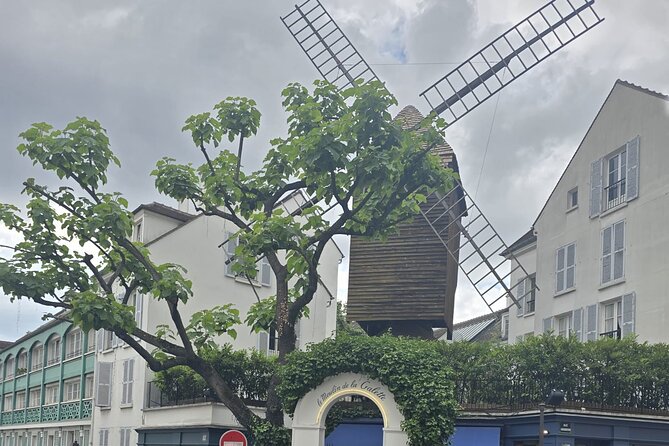
The route then reaches Le Moulin de la Galette for about five minutes. The place is linked to one of the best-known restaurants of 19th-century Montmartre, and its name also recalls the windmills that once marked the hill.
This is a quick stop, but it helps broaden the story. Montmartre was not only a workplace for painters. It was also a place to eat, socialize, and watch the changing life of the city. A five-minute visit will not cover every detail, yet it gives you another piece of the neighborhood’s social past.
Again, you see it from outside. The short timing means you should listen closely, take your picture, and be ready to move on.
Dalida’s bust and the human side of Montmartre
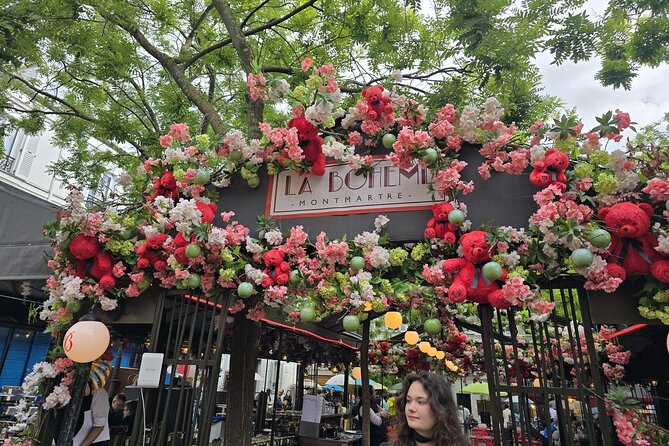
The five-minute stop at the Buste de Dalida adds music to the route. Dalida was a famous French singer who made a major mark on French song in the 1970s, and her connection with Montmartre gives the district a more recent cultural figure.
This stop is useful because it prevents the walk from becoming a tour only about painters from the past. You get a reminder that Montmartre continued to attract performers and artists long after its 19th-century art scene became famous.
The bust is a quick encounter rather than a full biography. If you know Dalida’s music, it may have extra meaning. If you do not, the guide’s explanation gives you a starting point for understanding her place in French popular culture.
La Maison Rose and Picasso’s favorite place
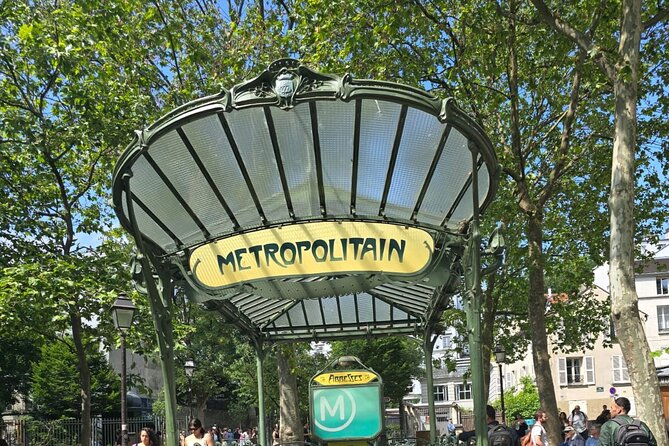
La Maison Rose is one of the most recognizable restaurant exteriors in Montmartre. Its pink walls make it an easy photo stop, but the guide also connects the restaurant with local artists and Pablo Picasso, who reportedly favored the place.
You have about five minutes here. That is enough to admire the building and hear how restaurants and cafés helped shape the artistic identity of the neighborhood. The stop also shows why Montmartre remains so appealing in photographs: the streets offer strong colors, unusual buildings, and stories tied to famous names.
Because the visit is brief and outside, you should not expect a meal or a long restaurant history. The useful part is seeing how an everyday place became part of the district’s artistic story.
Place du Tertre, where the art scene meets the public
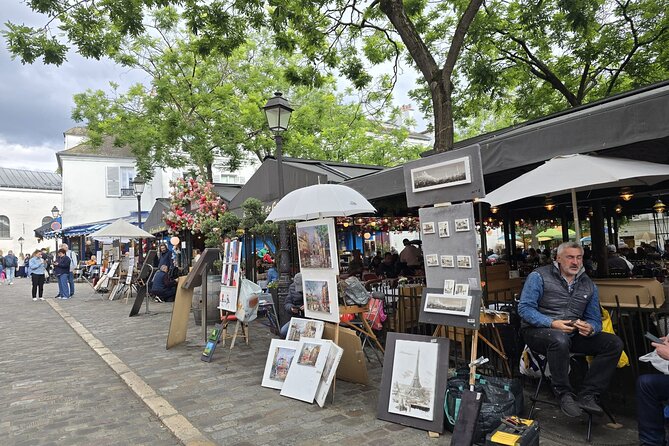
Place du Tertre brings you into the heart of Montmartre’s artistic district. The tour allows about five minutes here, enough to get a sense of the square and its role in the neighborhood.
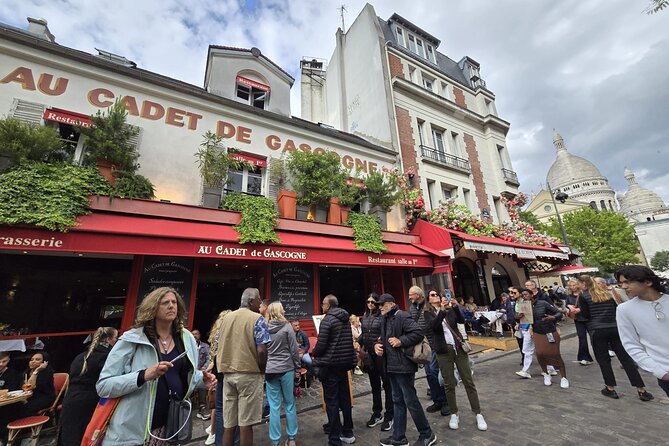
This is one of the places where Montmartre’s past and present meet. The square is tied to the area’s painters and public art culture, yet it is also one of the most visited parts of the hill. You may find it more crowded and commercial than the quieter streets earlier in the walk.
That contrast is worth noticing. Montmartre is not preserved as a museum. It is a lived-in district that presents its artistic past while serving today’s cafés, shops, and picture takers. A guide can help you see the difference between the historical story and the modern visitor experience.
The five-minute timing is modest. You will not have time to study every artist’s display or settle in for a drink, so plan to return later if the square catches your interest.
Finishing at Sacré-Coeur
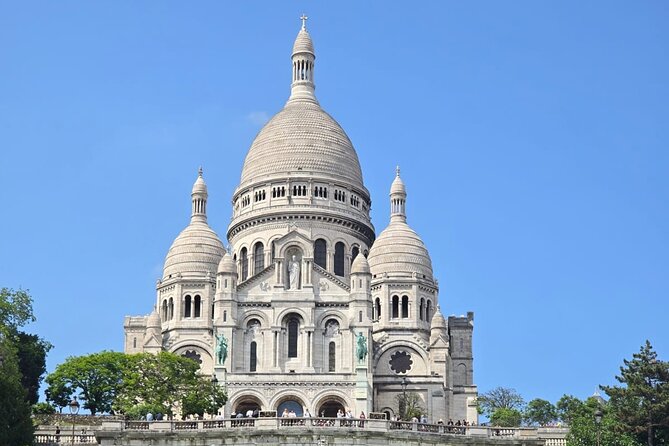
The walk ends at the Basilica of the Sacred Heart, commonly called Sacré-Coeur. The basilica is described as the symbol of Montmartre, and it provides the route with a strong visual finish after the uphill walk.
You receive about 10 minutes at the basilica, but the tour ends outside. Entry is free, and you can visit the interior on your own after the guide says goodbye. This is important when planning your day. The tour gives you orientation and background, but it does not include a guided visit inside the church.
The ending location is practical. From the basilica, you can continue exploring Montmartre independently, take in the view from the hill, or enter the church without arranging another meeting point. The route does not return you to Blanche, so plan your next step from the Sacré-Coeur area.
The climb is also the main physical point to consider. The guides have shown patience with people who walk slowly, have bad knees, or need frequent breaks. Still, this is a walking tour through a hilly district. Comfortable shoes and a pace that suits you will make the experience easier.
A guide who adjusts to your pace
The strongest feature here is the human side of the guiding. Arthur is specifically described as passionate about Montmartre, and he has led walks where one person was the only participant. In that case, the experience became close to a private tour, with time for many photographs and questions.
That situation cannot be guaranteed. The maximum group size is 50, so the feel can change greatly depending on the date. Still, the guide’s flexibility appears to be a real part of the experience. The walk has been slowed for people with limited mobility, bad knees, or difficulty keeping up.
One particularly useful detail is that a guide used prepared photos and materials during rain and cold to help explain places clearly. That suggests a guide who does more than recite names while walking. Weather can affect an outdoor tour, so this kind of preparation matters.
The tour is offered in English. Guide assignments may vary, and Arthur is not promised for every departure, but the experience is built around a professional guide rather than an audio recording or self-guided map.
What $36.12 gets you
At $36.12 per person, the price is reasonable if you want a guided introduction to Montmartre and do not want to spend half a day researching the neighborhood before you arrive.
You are paying for the guide, the route, and the explanations. You are not paying for meals, coffee, tea, or admission to the Moulin Rouge. The basilica is free to enter, but the tour ends outside and does not include an interior visit.
Value depends on your travel style. If you enjoy walking independently and already know the stories behind Picasso, Dalida, the Moulin Rouge, and Sacré-Coeur, you may prefer to explore without a guide. If you want a compact cultural overview, the price covers several important locations in one outing.
The average booking lead time is 41 days, so this is not always a last-minute purchase. If your Paris schedule is fixed, book early enough to secure the date you want. Confirmation is provided at booking, and the mobile ticket keeps the process simple.
Who should book this walk
I would recommend this experience to you if:
- You are visiting Montmartre for the first time.
- You want an English-language introduction in about 90 minutes.
- You enjoy art, music, romance, and neighborhood stories.
- You appreciate a guide who can slow down for photos or mobility needs.
- You want to finish near Sacré-Coeur and continue on your own.
- You prefer seeing several landmarks from outside rather than spending time inside one attraction.
I would think twice if you want a deep museum-style tour, a Moulin Rouge performance, a restaurant meal, or guaranteed private guiding. The group can reach 50 people, and most of the stops are brief exterior visits.
The free cancellation rule gives you some protection. You can cancel for a full refund up to 24 hours before the start time. Changes or cancellations made less than 24 hours before the start time are not accepted for a refund.
Should you book it?
Book this Montmartre walk if you want the neighborhood to make sense before you explore it on your own. The route has a good mix of famous sights and cultural figures, and the patient approach suits families, photographers, and anyone who does not want to rush up the hill.
I would especially choose it early in a Paris stay. Afterward, you can return to Place du Tertre, enter Sacré-Coeur, or revisit La Maison Rose with a better sense of why each place matters.
Skip it if you mainly want interiors, long stops, or a guaranteed private tour. For a short, story-led introduction that ends at one of Paris’s best-known landmarks, the $36.12 price is fair.
FAQ
How long does the Montmartre walking tour last?
The tour lasts approximately 1 hour and 30 minutes.
Where does the tour begin?
The meeting point is in the Blanche area at Blanche, 75018 Paris, France.
Where does the tour end?
The tour ends in front of the Basilica of Sacré-Coeur at 35 Rue du Chevalier de la Barre, 75018 Paris, France.
Is the tour offered in English?
Yes. The experience is offered in English.
Is admission to the Moulin Rouge included?
No. The Moulin Rouge is explored from the outside, and admission is not included.
Can I enter Sacré-Coeur after the tour?
Yes. The visit ends outside the basilica, which you can visit independently. Admission to the basilica is free.
Is coffee or tea included?
No. Coffee and tea are not included.
How large can the group be?
The tour can include a maximum of 50 people. In some cases, the group may be much smaller, including a private-feeling outing if only one person books.
What is the cancellation policy?
You can cancel up to 24 hours before the start time for a full refund. Cancellations or changes made less than 24 hours before the start time are not accepted for a refund.
Just added for couples in Paris
- Paris: Romantic Couple Photoshoot (with flower bouquet!)★ 4.2 · 6 reviews
- Valentine’s Day Seine River Champagne Cruise★ 5.0 · 2 reviews
- Live, Laugh, Love Along the Seine: Self-Guided Romantic Tour★ 5.0 · 9 reviews
- Romantic Tour of Paris in a Vintage Luxury Open-Top French Car★ 5.0 · 5 reviews
- Private Romantic Photoshoot in Paris with Bouquet of Flowers★ 5.0 · 3 reviews
- Private Proposal Photoshoot in Paris★ 5.0 · 5 reviews
- Proposal Photographer in Paris★ 5.0 · 9 reviews
- Bateaux Mouches Special Marriage Proposal Dinner Cruise in Paris★ 4.5 · 7 reviews
Paris Romantic Experiences, compared.
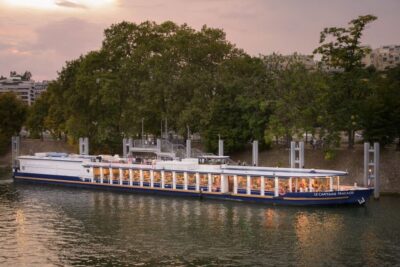
Romantic Cruise with 3-course Dinner on Seine River
Read our review →


Romantic Piano Concert at Saint-Julien-le-Pauvre
Read our review →
Classic, Romantic Paris: 3-Hour Vintage 2CV Tour
Read our review →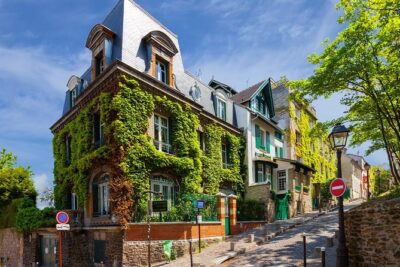
Romantic Montmartre: Paris Lost Lovers Exploration Game and Tour
Read our review →
Browse the lists this tour appears in